ISD’s Success Stories
Voices of Change and Collective Action
Across ISD’s diverse field areas, communities are rediscovering their strength through shared heritage, dialogue, and collective action. These stories reflect journeys of courage, cultural revival, gender equality, environmental stewardship, and youth leadership. Rooted in the idea of Composite Heritage, each narrative highlights how individuals and communities are challenging norms, preserving traditions, and building more inclusive, resilient futures.
Categories: Gender | Livelihoods | Environment | Community Leadership
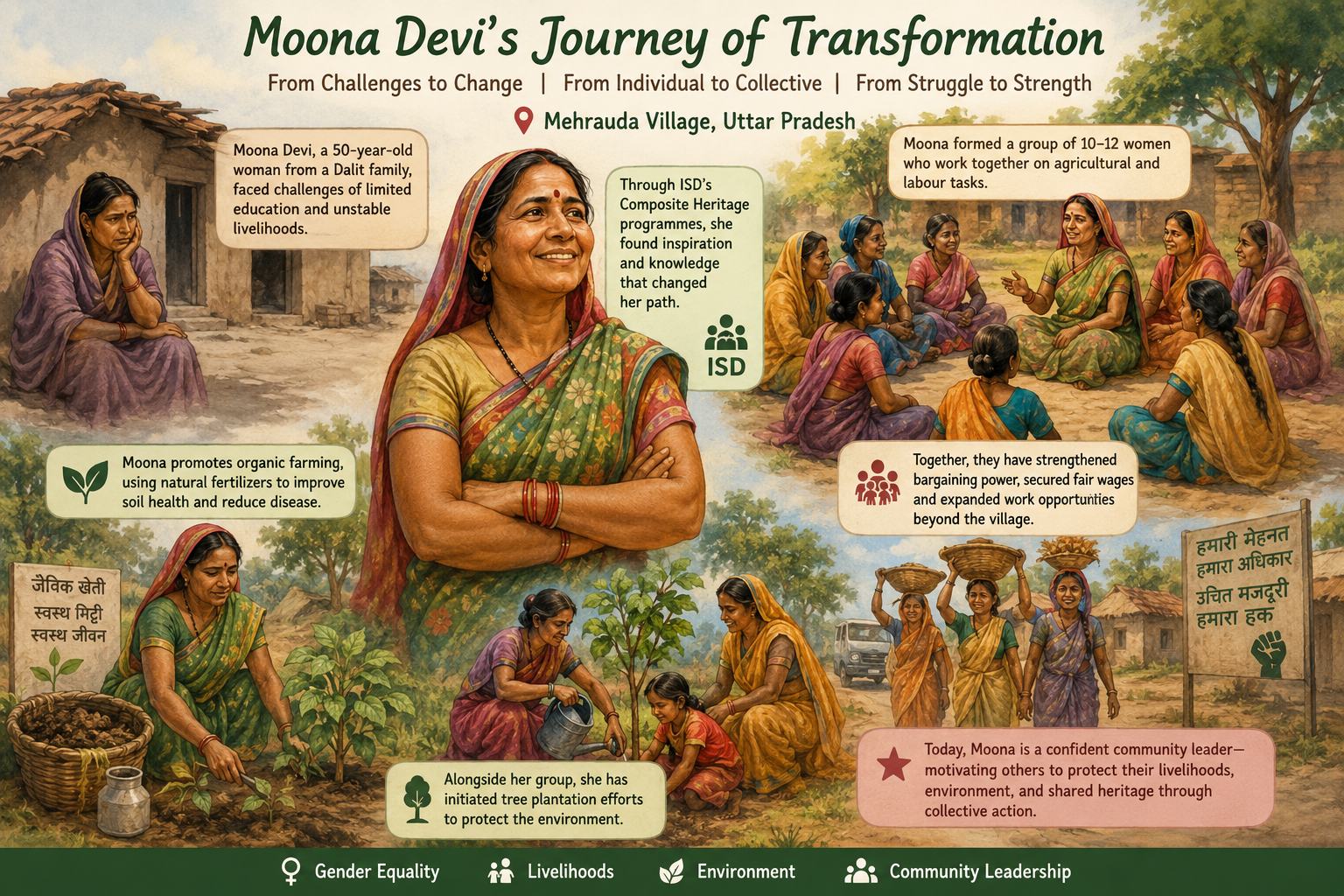
Journey of Transformation: Moona Devi’s Story
Moona Devi, a 50-year-old woman from Mehrauda village, comes from a Dalit family and had limited access to
education and stable livelihood opportunities. Despite these challenges, she actively participated in community
activities, eager to contribute.
Her journey transformed through engagement with ISD’s Composite Heritage programmes. Inspired by the learnings,
she formed a group of 10–12 women who now work together on agricultural and labour tasks. This collective has
strengthened their bargaining power, enabling them to secure fair wages and expand work opportunities beyond the
village.
Moona also promotes organic farming, encouraging the use of natural fertilizers to improve soil health and reduce
disease. Alongside her group, she has initiated tree plantation efforts to address environmental concerns.
Today, Moona is a confident community leader—motivating others to protect their livelihoods, environment, and
shared heritage through collective action.
Categories: Youth Leadership | Education | Community Action
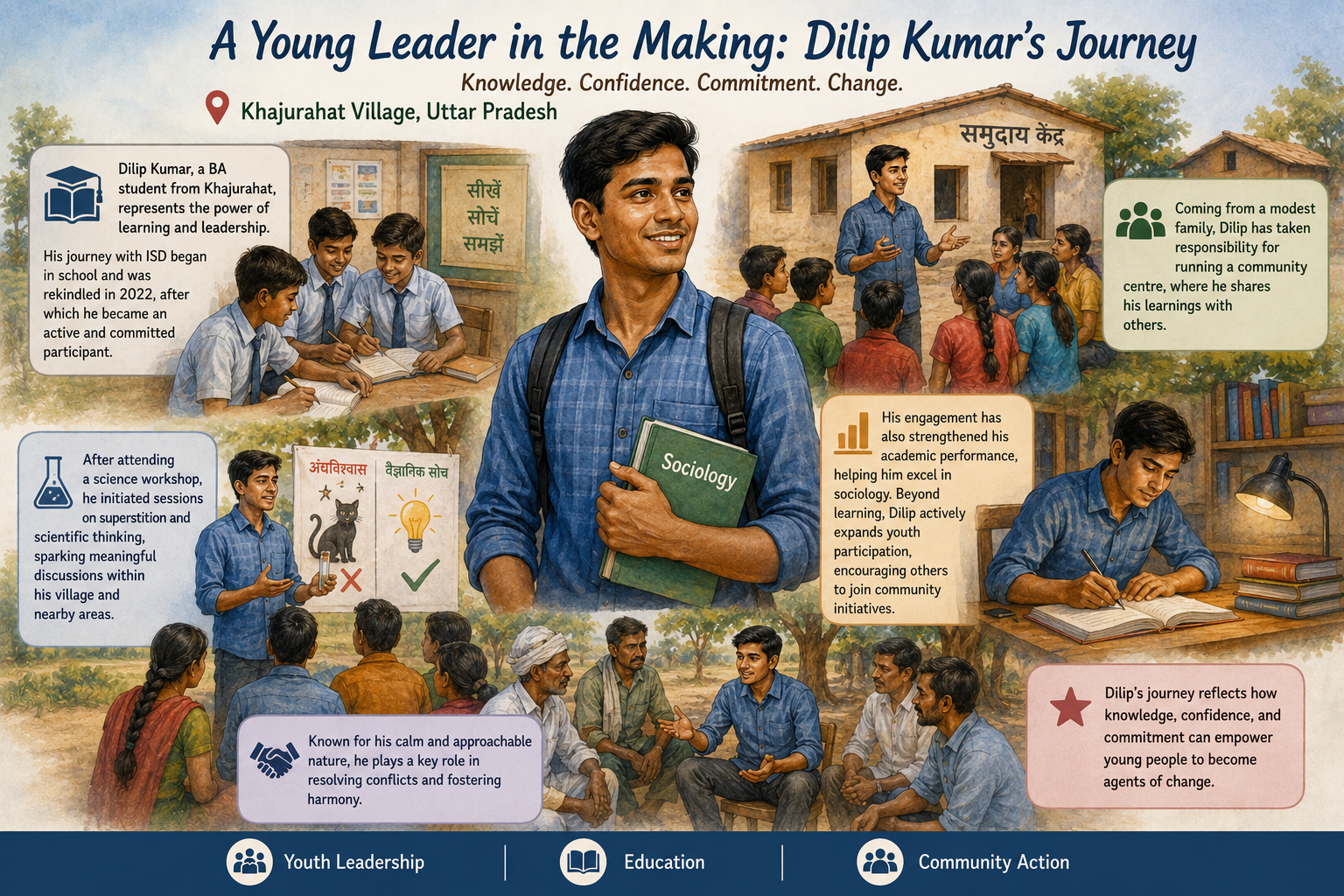
A Young Leader in the Making: Dilip Kumar’s Journey
Dilip Kumar, a BA student from Khajurahat, represents the power of learning and leadership. His journey with ISD began
in school and was rekindled in 2022, after which he became an active and committed participant.
Coming from a modest family, Dilip has taken responsibility for running a community centre, where he shares his
learnings with others. After attending a science workshop, he initiated sessions on superstition and scientific thinking,
sparking meaningful discussions within his village and nearby areas.
His engagement has also strengthened his academic performance, helping him excel in sociology. Beyond learning, Dilip
actively expands youth participation, encouraging others to join community initiatives.
Known for his calm and approachable nature, he plays a key role in resolving conflicts and fostering harmony. Dilip’s
journey reflects how knowledge, confidence, and commitment can empower young people to become agents of change.
Categories: Environment | Culture | Community Action
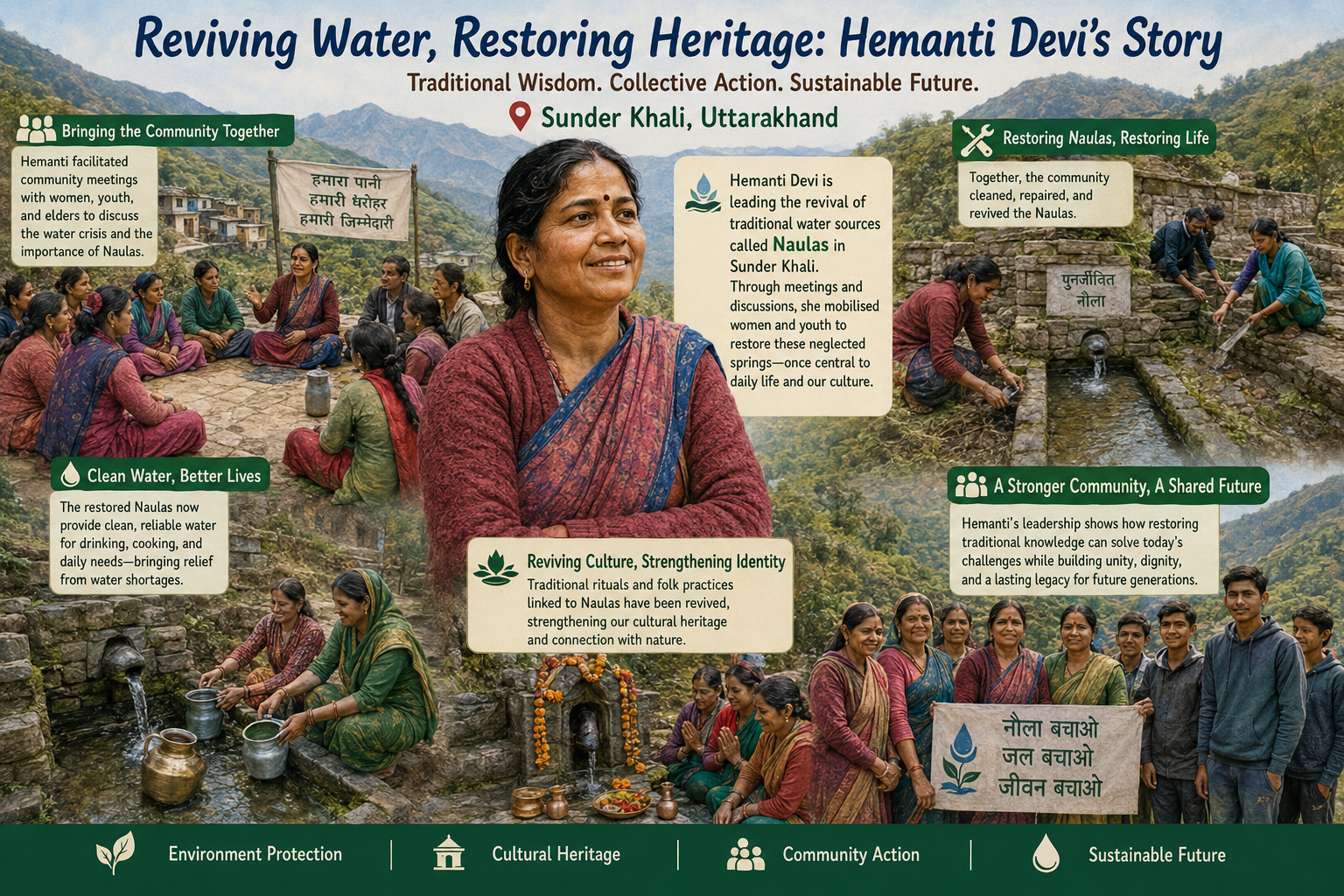
Reviving Water, Restoring Heritage: Hemanti Devi’s Story
In Sunder Khali, Hemanti Devi is leading efforts to revive traditional water sources known as Naulas. Through community
meetings and discussions, she mobilised women and youth to restore these neglected springs—once central to daily life
and cultural practices.
Facing recurring water shortages, the community recognised the importance of these natural resources. Collective
efforts led to the cleaning, restoration, and renewed use of Naulas, ensuring access to clean water for all.
Beyond water conservation, the initiative revived cultural traditions linked to these spaces, including rituals and folk
practices. Hemanti’s work demonstrates how restoring traditional knowledge can address modern challenges while
strengthening community bonds, dignity, and shared identity.
Categories: Social Inclusion | Gender | Community Action
Towards Social Integration: Shanti Nayal’s Story
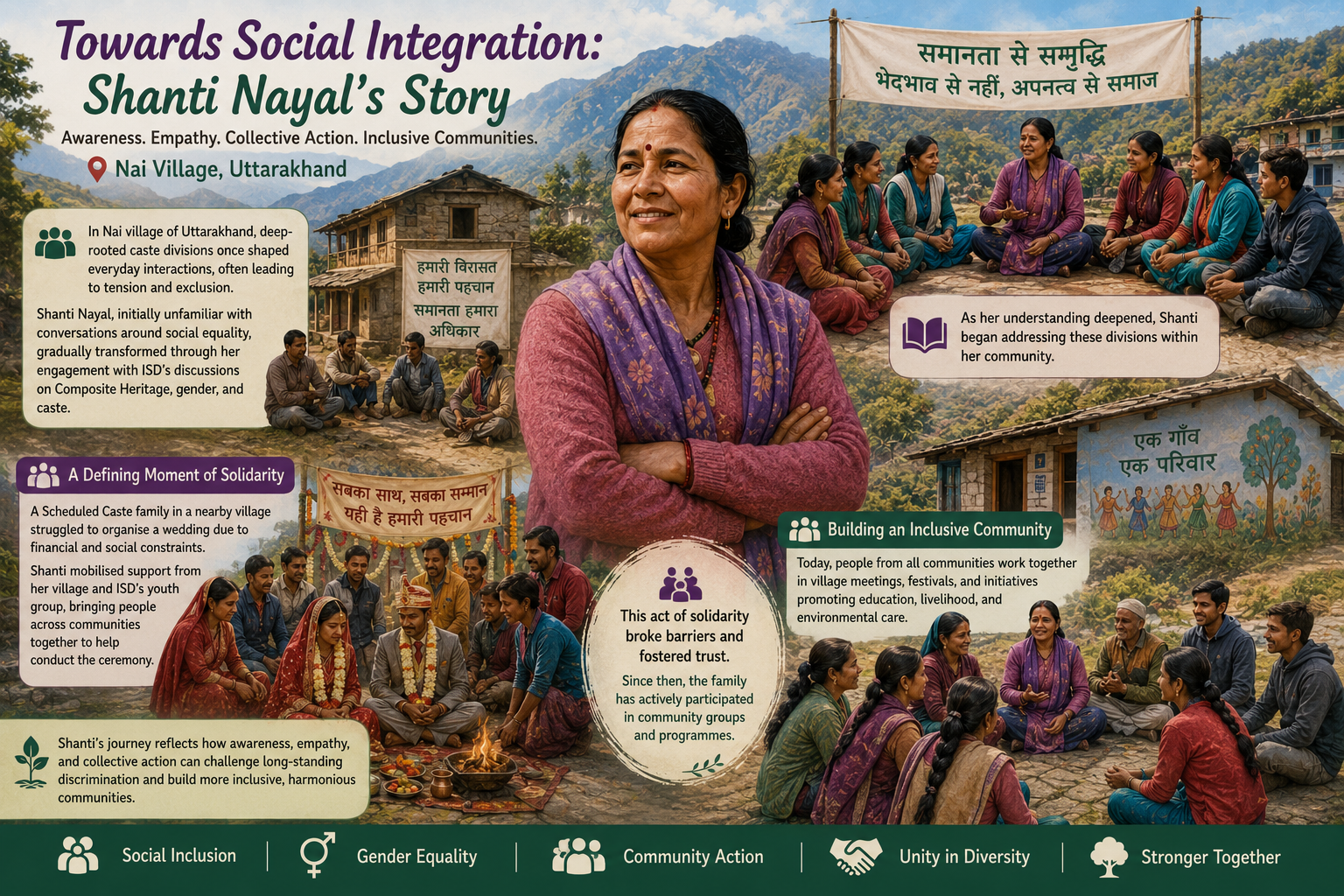
In Nai village of Uttarakhand, deep-rooted caste divisions once shaped everyday interactions, often leading to tension
and exclusion. Shanti Nayal, initially unfamiliar with conversations around social equality, gradually transformed through
her engagement with ISD’s discussions on Composite Heritage, gender, and caste.
As her understanding deepened, Shanti began addressing these divisions within her community. A defining moment
came when a Scheduled Caste family in a nearby village struggled to organise a wedding due to financial and social
constraints. Shanti mobilised support from her village and ISD’s youth group, bringing people across communities
together to help conduct the ceremony.
This act of solidarity broke barriers and fostered trust. Since then, the family has actively participated in community
groups and programmes.
Shanti’s journey reflects how awareness, empathy, and collective action can challenge long-standing discrimination and
build more inclusive, harmonious communities.
Categories: Environment | Livelihoods | Culture
Reviving Ayurvedic Wisdom: Healing and Livelihoods
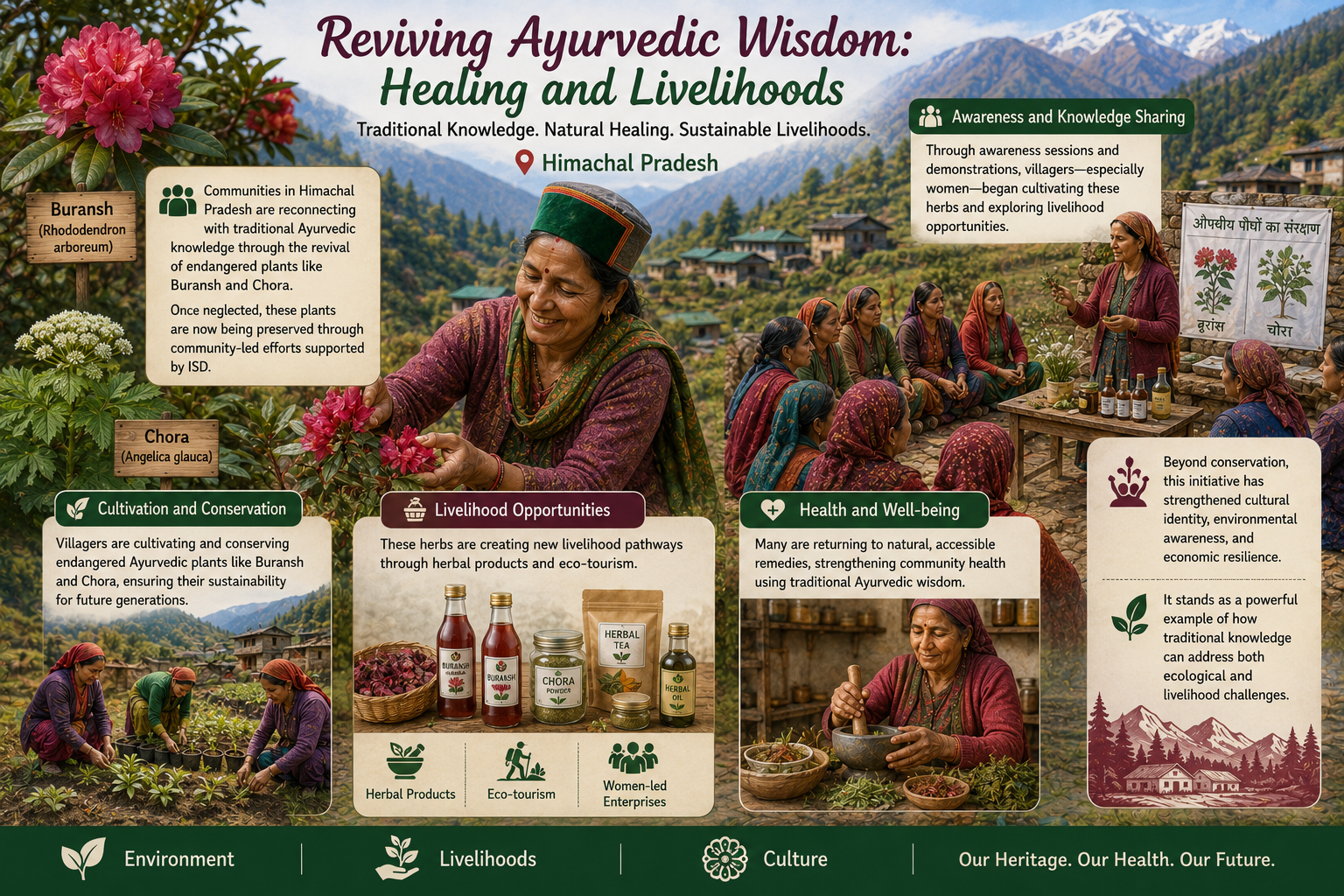
Communities in Himachal Pradesh are reconnecting with traditional Ayurvedic knowledge through the revival of
endangered plants like Buransh and Chora. Once neglected, these plants are now being preserved through community-
led efforts supported by ISD.
Through awareness sessions and demonstrations, villagers—especially women—began cultivating these herbs and
exploring livelihood opportunities such as herbal products and eco-tourism.
This revival has also influenced health practices, with many returning to natural, accessible remedies. Beyond
conservation, the initiative has strengthened cultural identity, environmental awareness, and economic resilience. It
stands as a powerful example of how traditional knowledge can address both ecological and livelihood challenges.
Categories: Social Inclusion | Culture | Women Leadership
Together for Peace and Progress: Surita Thakur’s Journey
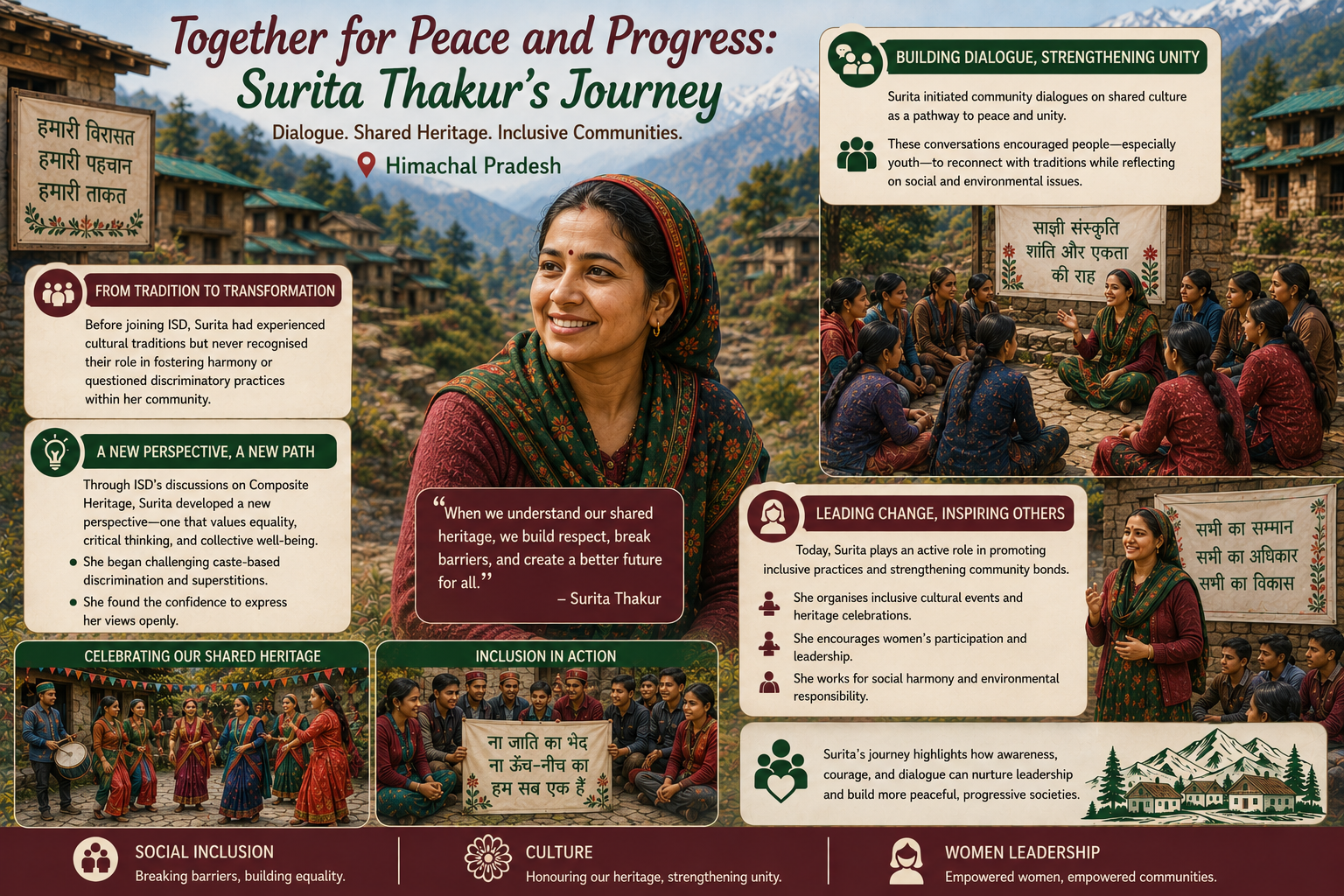
Surita Thakur’s journey reflects the transformative power of dialogue and shared heritage. Before joining ISD, she had
experienced cultural traditions but never recognised their role in fostering harmony or questioned discriminatory
practices within her community.
Through ISD’s discussions on Composite Heritage, Surita developed a new perspective—one that values equality, critical
thinking, and collective well-being. She began challenging caste-based discrimination and superstitions, while also
finding the confidence to express her views openly.
Taking initiative, she started community dialogues on shared culture as a pathway to peace and unity. These
conversations encouraged people—especially youth—to reconnect with traditions while reflecting on social and
environmental issues.
Today, Surita plays an active role in promoting inclusive practices and strengthening community bonds. Her journey
highlights how awareness, courage, and dialogue can nurture leadership and build more peaceful, progressive societies.
Categories: Youth Action | Gender | Awareness
Youth Leading Change: Nukkad Natak in Govindpur
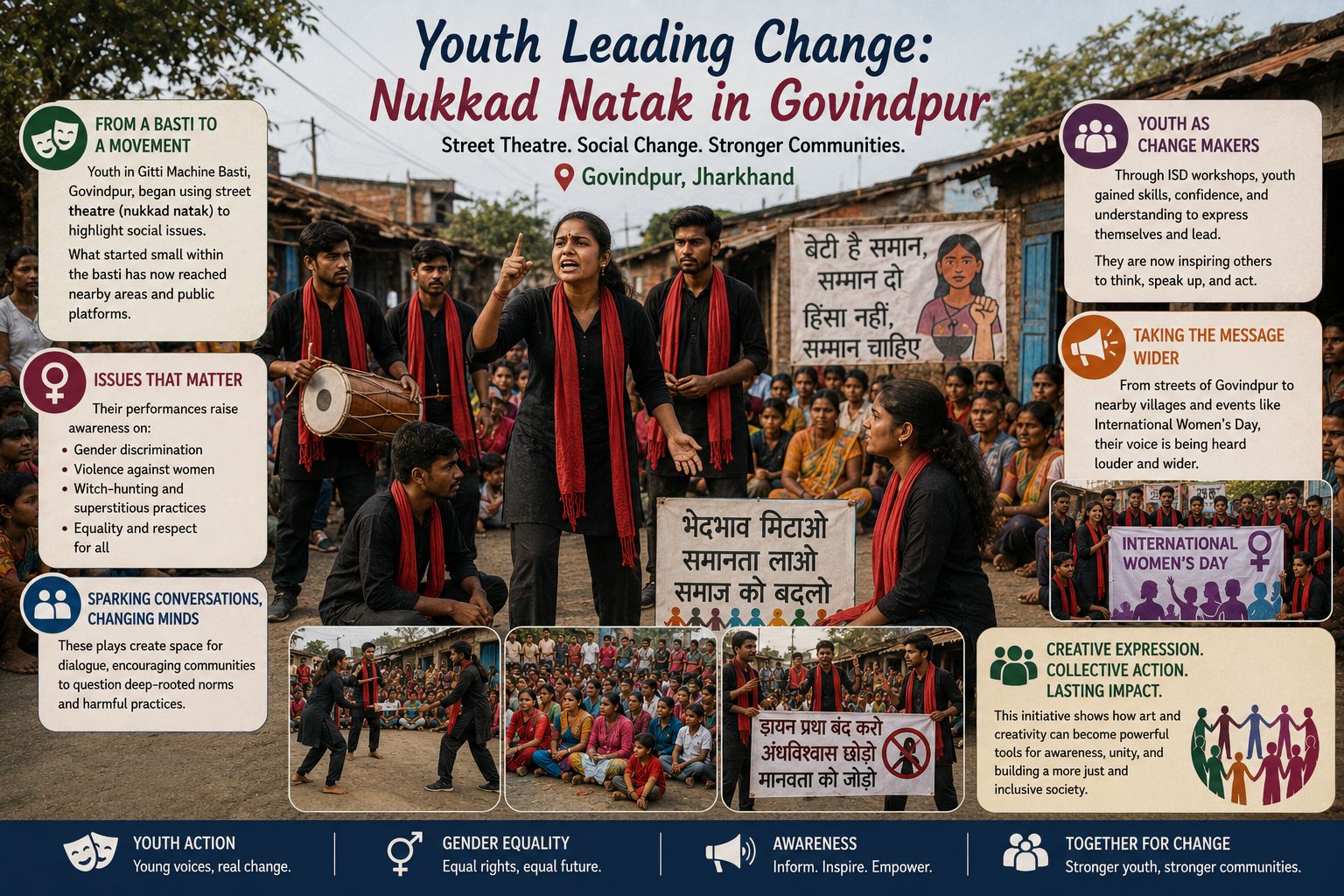
In Govindpur’s Gitti Machine Basti, youth are using street theatre (nukkad natak) to raise awareness on social issues.
Through ISD workshops, they created performances addressing gender discrimination, violence, and harmful practices
like witch-hunting.
What began within the basti expanded to nearby areas and public platforms, including International Women’s Day
events. These performances sparked conversations and encouraged communities to question deep-rooted norms.
The initiative has empowered young people as changemakers, strengthening their confidence and social responsibility.
Their work demonstrates how creative expression can become a powerful tool for awareness, dialogue, and collective
action.
Categories: Culture | Youth Action | Advocacy
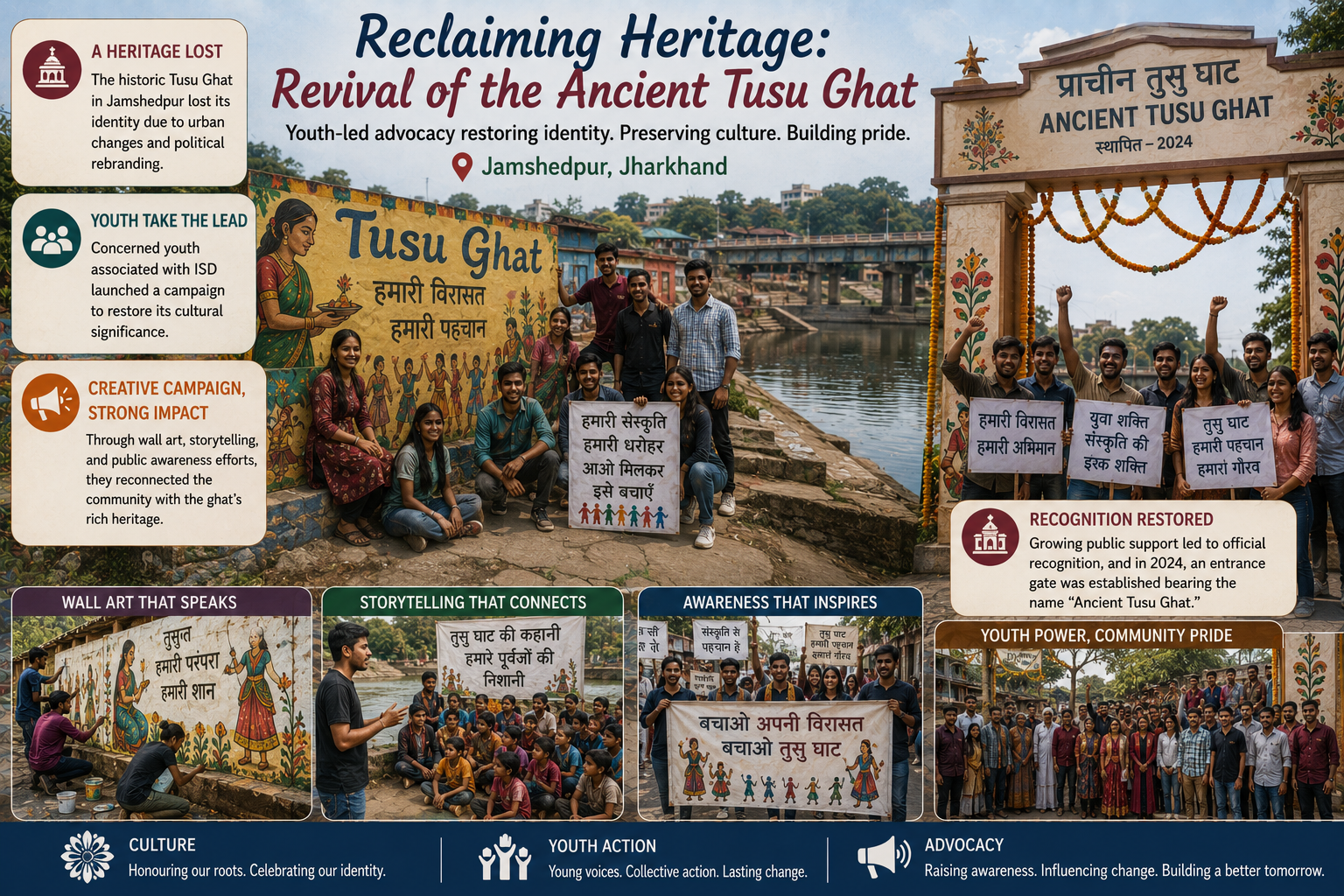
Reclaiming Heritage: Revival of the Ancient Tusu Ghat
In Jamshedpur, the historic Tusu Ghat lost its identity due to urban changes and political rebranding. Concerned youth
associated with ISD launched a campaign to restore its cultural significance.
Through wall art, storytelling, and public awareness efforts, they reconnected the community with the ghat’s heritage.
Growing public support led to official recognition, and in 2024, an entrance gate was established bearing the name
“Ancient Tusu Ghat.”
This initiative stands as a testament to youth-led advocacy, showing how collective action can preserve cultural identity
even in rapidly changing urban environments.
Categories: Gender | Youth Leadership | Education
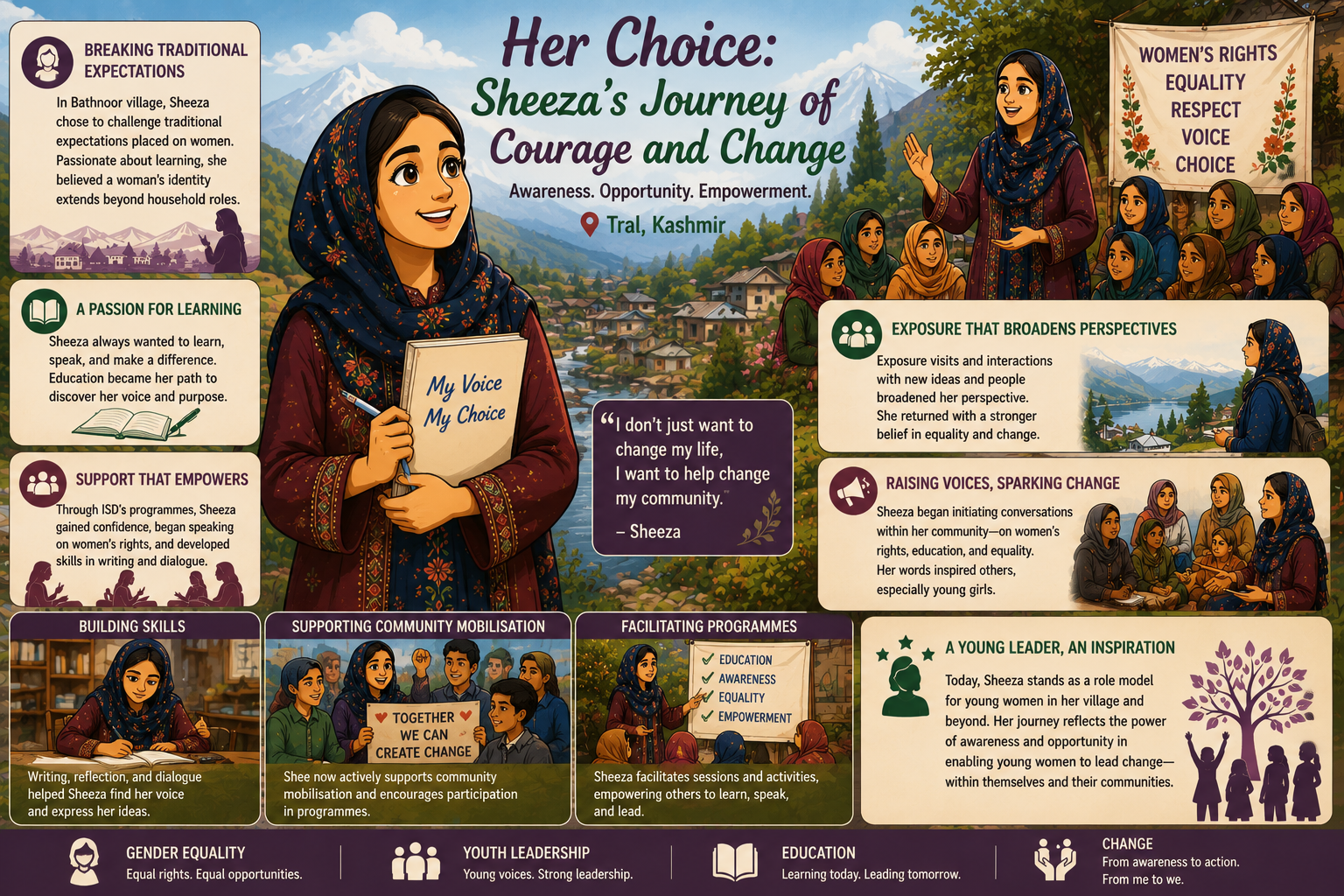
Her Choice: Sheeza’s Journey of Courage and Change
In Bathnoor village, Sheeza chose to challenge traditional expectations placed on women. Passionate about learning, she
believed a woman’s identity extends beyond household roles.
Through ISD’s programmes, she gained confidence, began speaking on women’s rights, and developed skills in writing
and dialogue. Exposure visits broadened her perspective, encouraging her to initiate conversations within her
community.
Today, Sheeza actively supports community mobilisation and programme facilitation. Her journey reflects the power of
awareness and opportunity in enabling young women to lead change—within themselves and their communities.
Categories: Youth Action | Culture | Community Engagement
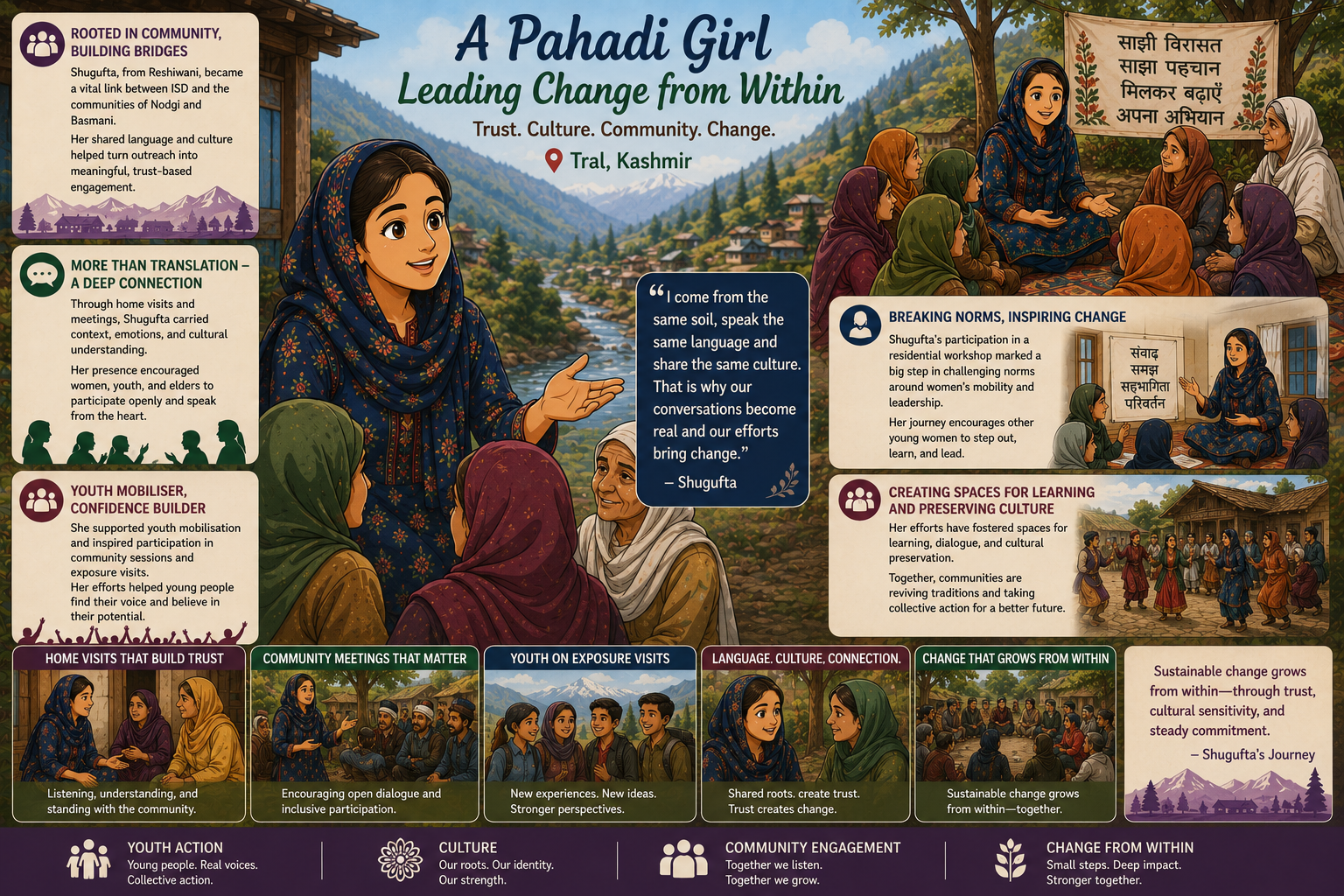
A Pahadi Girl Leading Change from Within
Shugufta, a young Pahadi woman from Reshiwani, emerged as a vital bridge between ISD and the communities of Nodgi
and Basmani. Rooted in the same language and culture, she helped transform outreach efforts into meaningful, trust-
based engagement.
Through home visits and meetings, Shugufta did more than translate—she carried context, emotions, and cultural
understanding. Her presence encouraged women, youth, and elders to participate openly, turning formal interactions
into genuine dialogue.
She also supported youth mobilisation and promoted participation in community sessions and exposure visits, gradually
building confidence among young people. Her participation in a residential workshop marked a significant shift in norms
around women’s mobility.
Today, her efforts have fostered spaces for learning, cultural preservation, and collective action. Shugufta’s journey
shows that sustainable change grows from within—through trust, cultural sensitivity, and steady commitment.